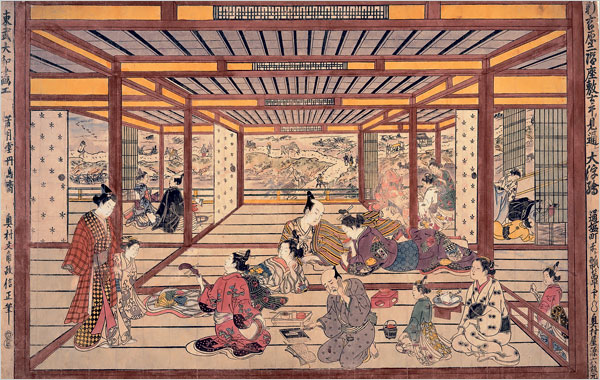
An Artist of the Floating World, Kazuo Ishiguro (1986)
I suppose that’s how life is. We grow and become burdened with responsibilities, and so we must prioritise our time to doing what are considered the more important things, which inadvertently forces us to cut back on the time we wish to spend doing the things we enjoy. This is not a review. I am terrible at doing such. And inexperienced, I should also mention.
I have read one Ishiguro book prior to this, a novel named When We Were Orphans. I must say I really do enjoy this man’s style of writing. Both novels (and I think all of the others he has written) are told in a retrospective narrative. But what I find most fascinating about the esteemed Ishiguro’s ability in writing, is how human he makes his characters. It is often notable in the fictional stories I have read how characters tend to show a constant perfection and consistency with their given persona. However, I do believe that we human beings are the most hypocritical and inconsistent of species. I don’t believe that to be a good or bad thing, more so as just something we must come to accept. The way we accept apples to grow on trees. Or who our mother is. A part of the natural forces of the way of life on this Earth.
I believe Ishiguro has also picked up on this particular observation, and he presents it in the most eloquent manner of writing. From the way his narrators digress in their storytelling, to how he filters in the human elements of contradiction and forgetfulness. I find myself becoming more and more impressed with his technique. I found this book to be extremely intriguing, however, because it spoke about matters which, in my personal life, I have often found myself contemplating.
One of the biggest themes that resonated with me was the idea of culture, tradition, and the ties we hold to these two elements of society. Masuji Ono (in his own words) would often comment on the youthful people of his society having no sense of respect for the traditions of Japan. This is notable with his telling of his conversations with his son-in-law and a former student. However, as we learn of Ono’s own youth, it is noticeable how he shared a similar attitude at that age. Ono is a very delusional character, one who believes he had a more important role to play in his world than he actually did. But the telling of the story did make me wonder about forgetfulness and hypocrisy. Often we may hold a particular perspective, but when it is someone else’s turn to hold a variation of it that doesn’t necessarily tie in with our own, we tend to rebuke and reject the view. As much as we have a mind of our own, we forget that others also do. Human nature, I suppose, to forget and to contradict our own actions.
Maybe it is an illustration of the generational differences, or maybe it is an attempt at showing us how alike we are, but Ishiguro’s writing has irked my mind to consider both. In a way, he has helped me progress further in my attempts at becoming a more understanding person. People’s experiences of life shape them differently from our own, and so we must learn to accept that our understandings and values will also vary. But such does not mean we cannot respect each other. Sometimes we must not let our differences get in the way of our progression. Sometimes, we must learn to accept that not everyone in the world will share parts of our identity, of our philosophy, of our ideas of the future, and so although we may not be able to connect with them, we have no reason to belittle them.
In the end, who knows who is right and who is wrong? We’re all lost souls, trying to find a place in a world that does not wish for us to belong. We only have ourselves to help, but maybe kindness and respect to a stranger will allow us to find a friend. And friendship can be a beautiful thing.
 Weathering Cloud